

By Ikechukwu Henry
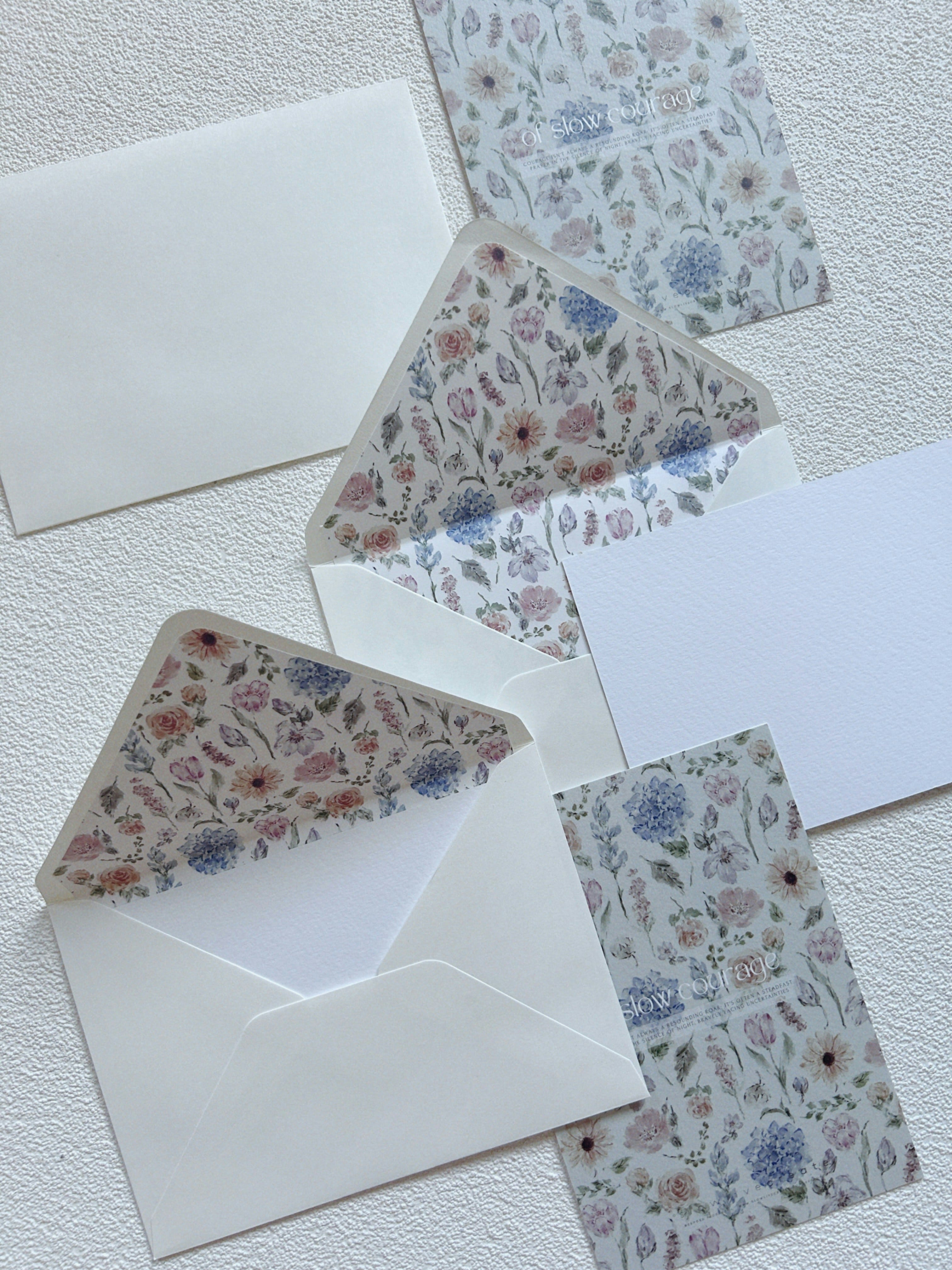
Image credits to Crystal Y on Unsplash
I always buy the card in the same shop, the small stationery store two streets from my apartment. The woman at the counter recognizes me by now, though neither of us says anything that acknowledges it. She only slides the card into a thin plastic sleeve and wishes me a good day. I thank her, and the exchange ends there — efficient, polite, forgettable.
The cards change every year. This one is bright blue, with a printed gold border and a balloon that looks a little too cheerful. Happy Birthday, Dad! The exclamation mark feels dishonest, but I buy it anyway. I’ve learned not to look for a card that suits me. The point is not the message. The point is that there is one.
At home, I place the card on my desk before taking off my shoes. It sits there, upright against the lamp, waiting. The desk is neat — it always is. There’s the small pile of bills, a glass jar of pens, the drawer beneath that holds what I don’t let anyone see. I sit, let my hands rest on the cool surface, and listen to the sound of the street outside. Someone is selling fruits from a cart; a child laughs, quick and unguarded. The world moves without me, as it should.
I open the drawer.
The cards are there, stacked in one straight line. Thirty, maybe more. The envelopes are still sealed, though I know what’s inside each one. They are my years, pressed flat, catalogued by paper thickness and fading ink. The topmost card has a little bend at the corner — last year’s. I remember writing it while the news was on, the sound of voices filling the room to keep me from thinking too much.
I pick up the new card and study the printed message again. “Hope your day is filled with joy.” The kind of thing written by someone who has never met you. I take a pen from the jar — the black one that doesn’t bleed through paper — and open the card.
For a moment, I write what the card expects:
Happy Birthday, Dad. Hope you have a good one.
The handwriting is steady, practiced from years of saying nothing directly. But then I pause, and under the printed line, I begin to write what I actually mean to say.
> “I quit the job. The one you said I’d regret leaving. I haven’t regretted it yet, though I still hear your voice sometimes when I make a decision — that quiet disapproval you never said aloud but managed to fill a room with.”
The pen moves easily, as if my hand knows the shape of this ritual better than my mind does. I write about the new apartment, about the small victory of paying off the last of the debt, about the book I haven’t finished reading because I can’t seem to sit still long enough. None of this will ever reach him. That has always been the condition of the writing: honesty without consequence.
When the page starts to look full, I stop. I don’t read over what I’ve written — I never do. Reading it would make it performative, and I don’t want to perform. I want to record.
I fold the card, slip it back into its envelope, and seal it. The paper feels heavier once it’s closed, as if the ink adds weight beyond measure. I look at the stack again — the growing spine of my silence — and place this year’s card carefully on top.
For a long moment, I rest my palm on the drawer before sliding it shut. It’s not reverence. It’s not grief. It’s the simple acknowledgment of something that exists because I keep it alive.
After I close the drawer, I sit there longer than I mean to. The lamplight pools over the desk, soft and even. The envelope’s faint line is still visible beneath the edge of the drawer, like a breath held back.
I think of the first time I bought a card like this. I was twenty, still living at home. I hadn’t meant for it to become a ritual then — it was only supposed to be an apology. I remember standing in a supermarket aisle, reading one card after another, each more hollow than the last. In the end, I picked one that said To the best dad in the world. I remember thinking it would annoy him, how the praise would sound like mockery. Maybe that was why I chose it.
But I never gave it to him. That was the start of the drawer.
Every year since then, I’ve bought another. Sometimes I imagine him finding them — maybe after I’m gone, or after he’s gone — and realizing what I meant all along. It’s a childish thought, but it’s hard to stop myself from having it. It’s the same kind of imagining that keeps people writing diaries no one will read.
My father never liked birthdays. He said they were unnecessary — that a man shouldn’t need a date to remember he was alive. I used to think it was because he didn’t like the attention. Now I think it was because birthdays are too intimate; they invite reflection, and reflection was never something he wanted near him.
When I was a child, he’d come home from work and drop his keys on the dining table with that same deliberate motion — not careless, but final. Then he would sit and read the newspaper until my mother called us for dinner. We spoke, but never about anything that mattered. His voice was like a wall — not harsh, just impassable. I learned, without him ever saying it, what not to say.
I trace the edge of the desk with my finger, trying to picture his hands. The memory is dim, shaped more by habit than clarity. I can’t remember the last time I saw him — not clearly, anyway. Only fragments: the back of his head at my graduation, the way he folded his shirts, the faint smell of camphor on his clothes.
It strikes me that I have built an entire ritual around a man I no longer know how to describe. The cards are the only proof that he still exists somewhere in my life — even if that existence is confined to a drawer.
A small sound comes from outside, someone dragging a chair across their floor. I glance at the clock but don’t register the time. The ritual is done. It always ends the same way: with the card sealed, the drawer closed, and the room returned to order.
I push the chair back and stand. My knees ache a little — a reminder that time has been moving all along, that the drawer’s quiet accumulation has been counting something more than birthdays.
Before I turn off the light, I glance once more at the desk. There’s nothing unusual about it. Just a piece of furniture holding paper and memory. But I know what it contains — the small, worded proof that silence can take shape and still feel alive.
I leave the room. Behind me, the drawer stays closed, but not forgotten.
The card that began it all had a cartoon cake on the front and too much glitter. I remember that detail because the glitter fell on my bedsheet, and I brushed it off with the side of my palm until it left faint silver streaks on the fabric. I had bought it that afternoon, after the argument. I don’t remember what drove me to choose something so childish — maybe it was the only one left, or maybe I wanted to soften what I’d written inside.
That birthday was supposed to be simple. He’d turned sixty. My mother had cooked rice, the good kind, the kind that didn’t stick together, and had invited two of his friends from work. I’d come home from university for the weekend. There were meant to be photographs, laughter, maybe even a smile that reached his eyes. But by noon, none of that was possible.
The argument started in the living room. I had told him I wanted to change my course of study. Law had become unbearable, every class a weight pressing against the back of my throat. I’d discovered literature, and for the first time, I felt the pulse of something that belonged to me. He sat on the sofa, his elbows resting on his knees, his expression fixed in that flat way of his that could erase warmth from the air.
“You’ll understand when you’re older,” he said, as though I were asking for something absurd.
“I’m old enough now,” I’d said. “I just don’t want to live the life you planned for me.”
He looked up at me then — not angry, not even disappointed, just quietly certain. “You’ll see sense soon. People don’t eat poems.”
There was nothing cruel in his tone, which somehow made it worse. He didn’t raise his voice. He didn’t argue. He simply ended the conversation by standing and walking to his room. The quiet after that felt like a door locking itself.
I stood there, still holding the folded paper I had brought to show him — the draft of a short story that had won a small campus competition. He didn’t even look at it.
I think what hurt most wasn’t that he disapproved, but that he didn’t care enough to listen. He was convinced that his silence was reason. And so I matched it with my own.
After dinner — which none of us enjoyed — I went upstairs to my room. My mother had tried to console me in that careful way of hers, half on his side, half on mine, telling me that time would make things right. But time, I would later learn, does not heal what you refuse to touch.
I remember the sound of the house that evening — the plates being washed, the slow hum of the fridge, the soft creak of the stair rail when he came up later. I sat at my desk, the card open before me, pen in hand.
Inside, I wrote:
Happy Birthday, Dad. I wanted to tell you that I love you, but I also wanted to tell you that you are wrong. Maybe those two things can exist in the same sentence. Maybe that’s all I can offer you right now.
The words looked too fragile on the glossy paper, so I wrote them again on the right side, pressing harder. The second version looked angrier, but truer.
When I finished, I folded the card and stared at it for a long time. It was meant to go under his door, like an offering. A small peace gesture. But as I stood there, the folded card in my hand, I could hear his faint breathing through the wood. I imagined him waking, reading it, shaking his head, and placing it in the bin without a word. The thought of that rejection — quiet, practical, final — stopped me.
I went back to my room, slipped the card into my desk drawer, and shut it. That sound — the drawer closing — stayed with me for years. It was the sound of surrender, though I didn’t know it then.
I did not buy another card the next year because I wanted to continue the ritual. I bought it because I didn’t know what else to do with the ache that followed me. Writing felt safer than speaking.
Every card after that was another version of that night — a new attempt to finish the sentence I never delivered.
The next morning, he acted as if nothing had happened. He came down to breakfast in his usual crisp shirt, the one he wore even on weekends, and poured himself a cup of tea without looking at me. His voice, when he spoke, carried no trace of the argument — it was smooth, practiced, the same one he used when talking to his colleagues on the phone.
“Your mother said you’re going back tomorrow,” he said.
I nodded. He did not ask what time my bus would leave. He didn’t ask whether I needed fare. It was as if the argument had scrubbed away every trace of our relationship except the formal, procedural exchanges of two people sharing the same table.
I remember watching him butter his toast with small, even strokes, his movements deliberate and unhurried. There was a stillness to him that morning that felt like punishment. I wanted him to say something — anything that acknowledged the gap between us. Even anger would have been easier. But he folded the newspaper, took his tea, and walked out to the verandah. The sound of his shoes against the tiled floor lingered after he left, faint but sharp.
When my mother asked me to pass him the plate of akara she had fried, I said no. It wasn’t rebellion — just exhaustion. The night before had rearranged something in me. The silence was no longer a pause waiting to be broken; it had become a room of its own.
That afternoon, while my mother napped, I opened the drawer again and looked at the card. The message seemed childish already, too full of pleading. I almost tore it, but I couldn’t bring myself to. Instead, I slid it deeper into the drawer, underneath old notebooks and forgotten receipts, as though hiding it could erase the fact that it existed.
The following week, I returned to school. He didn’t call, and I didn’t write. When my mother sent foodstuffs by bus, she included a short note in her neat, looping handwriting — “Your father says he hopes you’re studying well.” It was always her words, her voice, standing in for both of us. That, too, became part of the ritual: our conversations filtered through her, translated into something polite and bloodless.
Years later, when I got my first job, I found myself walking into a stationery shop the week before his birthday. I didn’t plan to. I was buying printer paper, and there it was — a rack of colorful cards lined up in rows, cheerful and hollow. I picked one without thinking. When I got home, I wrote inside it, and once again, I didn’t post it.
That was how it began — not out of affection, not out of duty, but habit. The act of writing became the only form of speech I could manage without reopening the wound.
Each year, I told myself it was the last. Each year, I found myself at that same desk, pen hovering above glossy paper, unsure whether I was writing to him or to the memory of the father I’d once hoped he could be.
By the fifth year, I had started numbering them — small digits in the corner of the envelope, like cataloguing a collection. The handwriting shifted over time, slanting forward, growing firmer, more compact. What began as a small gesture of hurt had turned into an archive of endurance.
Sometimes, I imagined him on the other side of the silence, older, perhaps waiting for a call that never came. Maybe he, too, rehearsed words and left them unsaid. But I never knew. I never asked. The ritual became our shared language — one he never learned to speak.
By the time I realized what I’d created, the drawer had become too full to close easily. Each envelope carried a weight larger than its paper, and I began to see that I had not built an archive of love or reconciliation, but a museum of everything we failed to say.
And still, every year, I bought another card.
***
The call came quietly, without ceremony. My mother’s voice was steady, almost detached. She said the words as if naming the weather. “Your father passed this morning.”
I thanked her for telling me. That was all. When the call ended, I sat with the phone still in my hand, watching the light shift across the floor. The apartment felt smaller than it had that morning. Every sound — the hum of the refrigerator, the distant bark of a dog outside — pressed against me, too sharp, too defined.
I didn’t cry. I didn’t even feel the impulse. It was as though grief had been siphoned out of me over the years, drop by drop, with each unwritten message.
After a while, I walked to the desk. The drawer resisted slightly before sliding open, as if reluctant to show what it held. The stack of cards filled the space neatly, the edges uneven, the colors softened by time. Some had kept their brightness — the ones from my thirties, when I was still hopeful, when I thought reconciliation might one day come. Others had yellowed, their envelopes curling at the corners.
I took them out one by one and arranged them on the desk. The sight was overwhelming — a skyline of years, thirty of them at least. I hadn’t realized how many there were. The earliest ones were small and cheap, cartoonish, bought when money was tight. The later ones were sleeker, embossed, chosen with care. The change was visible, as if my adulthood had been measured in stationery.
For a long time, I simply looked. Then I began to read.
The first card was from the year of the argument. The handwriting was uncertain, the letters wide and uneven. The message was short, full of bravado. I hope you’re happy, wherever you are. I’m fine. Beneath it, I had written a sentence that startled me even now: I wish you would just ask me why.
The next few followed a pattern — defiance, then longing, then resignation. Each year softened the anger but thickened the distance. Some cards were filled with updates about work or friends. Others were only a few sentences long, sometimes just one. I’m moving. I met someone. I almost called.
As I read through them, I realized that my life had unfolded entirely in that drawer. Every promotion, every heartbreak, every attempt at courage lived there, documented and preserved. I had written them as though he might one day read them, but the truth was simpler: I wrote them because it was the only way I could bear not speaking.
Midway through the stack, I found the card I had written after his stroke five years ago. I’d visited him in the hospital then — the first time I’d seen him in over a decade. His body had seemed smaller, his voice distant. I remembered the smell of disinfectant and how his eyes had flicked past me, searching for someone else. I had gone home and written that card immediately after.
The message was longer than the others. I told him about the fear I’d felt when I saw him lying there, how the machines had beeped in steady rhythm, how his hands had trembled when he reached for the glass of water. I had written, I forgive you, but I don’t know if I can still be your son. Then I sealed the envelope and never mailed it.
That was the year I stopped visiting. The ritual returned to its quiet rhythm, though the words had begun to blur together.
Now, reading through them all, I felt an unexpected calm. It wasn’t forgiveness exactly — more like the exhaustion that follows a long illness. I had carried this weight so long that I no longer noticed it pressing against me.
At the bottom of the pile lay the newest one — the one I had written earlier that day, before the call. I opened it slowly. Inside, the message was brief:
Happy Birthday, Dad. I left the job. You’d probably say it was foolish, but I think I finally understand what you meant about security. Maybe we both wanted the same thing, just in different ways.
I placed the card beside the others, aligning their edges. They looked like chapters in a book I had written accidentally, without knowing it. A history of absence.
When I reached for the first and the last card together, I noticed the difference in their weight. The paper had changed over the years, grown thicker, more expensive. But that wasn’t what I felt. It was the difference in the hand that wrote them — the boy who wanted to be heard, and the man who no longer expected to be.
I thought of the years between — the birthdays that passed without calls, the messages left unsent. And yet, somehow, he had lived inside each one of these envelopes.
I didn’t light a candle or whisper a prayer. I simply read the cards again, slowly this time, until my eyes blurred from the effort. Then I stacked them back together, straightened them with the edge of my palm, and slid them into the drawer.
When the drawer closed, the soft click sounded final — not like an ending, but an acknowledgment.
He was gone. The ritual was complete.
I turned off the light and walked away from the desk. In the darkened room, I could almost imagine that the conversation had finally happened — that across all those years and words and envelopes, something had reached him after all.
And for the first time in a long while, I did not feel the need to buy another card.
Read the pervious story here. Don't forget to engage, please.
That was very heavy. That's all I feel, heaviness. Time gone by.
I don't know how to appreciate each of your comments that had been keeping me tethered here. Thank you so much, Colleen. I really appreciate every time you spend reading me. 🙏